


Personal Trainer Course Series: Muscle Ageing and Resistance Training
We all know resistance training does wonders for older adults. Improved strength, better balance, greater independence. It’s a no-brainer, right? But while we often focus on what we can see, the extra reps, the heavier lifts, the steadier gait, there’s a whole lot happening on a cellular level that we don’t always talk about.
What if gaining strength didn’t always mean better muscle health overall? What if some changes that happen inside the muscle during training could actually make it more fatigued in the long run?
Sounds odd, but that’s exactly what one recent study uncovered. And it might just get you thinking differently about how we train older clients.
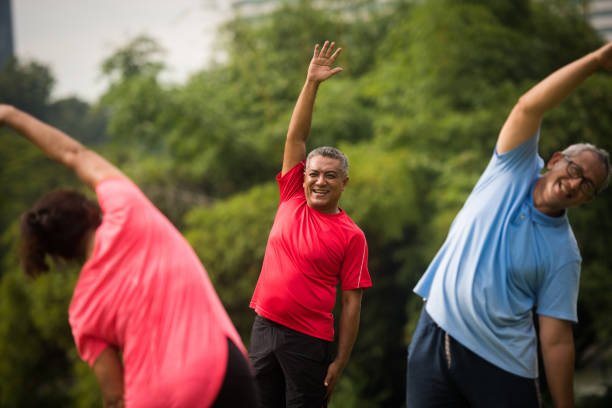
Ageing Muscles: What’s Really Going On?
As we age, our muscles naturally lose mass, strength and power. That much most people already know. But it’s not just the size of the muscle that changes. Inside those muscle fibres, the mitochondria, often called the powerhouses of the cell, start to decline in both number and function. These are the structures that help convert fuel into energy. When they’re not working as well, it means more fatigue, slower recovery and just feeling generally knackered after physical activity.
That’s where resistance training usually comes in. It’s known to help maintain or rebuild muscle mass and strength, which is brilliant. But this particular study looked beyond the surface and asked, “what happens to mitochondrial health during resistance training in older men?”
The Study That Raised a Few Eyebrows
A team of researchers got 16 healthy but untrained older men (average age 66) to take part in a 12-week resistance training programme. Standard stuff including full-body workouts three times a week.
At the end of the programme, they tested the usual strength markers and, as expected, saw solid improvements. Isometric and dynamic strength went up, no surprises there. But then they looked at something a bit different, fatigue resistance. The results were the opposite of what they expected.
The men were actually more fatigued post-training than they were at the start. Even more surprising, muscle biopsies showed that two key proteins, SIRT1 and PGC-1α, had dropped in expression. These aren’t obscure molecular details, they’re critical for mitochondrial function and energy production in muscle.
So What Are SIRT1 and PGC-1α?

Let’s not get too tangled in biochemistry, but it’s worth knowing what these two proteins do.
SIRT1 is like a cellular repairman – it helps regulate inflammation, ageing, and energy use, and is heavily involved in keeping mitochondria ticking over properly. It’s often talked about in ageing and longevity research.
PGC-1α (short for peroxisome proliferator-activated receptor gamma coactivator 1-alpha, is basically the master controller of mitochondrial creation and function. When you do aerobic or endurance training, it’s the guy pulling the strings behind improved stamina and energy efficiency.
So when both of these go down after 12 weeks of resistance training, it raises a pretty important question, “are we improving one aspect of fitness (strength) at the cost of another (fatigue resistance and mitochondrial health)?”
Gains With a Catch?
This study suggests there might be a trade-off, at least when it comes to resistance training alone. Strength goes up, which is great. But fatigue resistance might take a hit and the cellular machinery that supports energy production seems to back off a bit.
Now, it’s worth pointing out this doesn’t mean resistance training is bad, far from it. But it does highlight that training creates very specific adaptations. If you train for strength, you get stronger. But if you want better stamina and muscle energy resilience, you might need to stimulate the body in a different way, with aerobic work, longer time-under-tension or hybrid training methods.
Final Thoughts
This study doesn’t flip the script on resistance training, it just adds a new layer to think about. Muscles aren’t just meat and motion, they’re full of complex systems that respond in different ways to different types of training. Strength gains are brilliant, but they’re not the whole story. Especially as we get older.
So next time you’re building a programme for an older client, consider what’s happening on the inside as well as what you’re seeing in the gym. A well-rounded approach might just keep their mitochondria and their motivation going strong.
Exercise for Older Adults Course – Distance Study
Personal Training for Special Populations – Safe, Effective, and Inclusive Fitness